Wednesday, April 4, 2012

Joyful Angst of Teaching

Two things invariably happen to me when I experience good professional development: 1) I get really excited. I can hardly sit still and can't wait to get back to my home office and classroom to start exploring the new knowledge and laying out how to apply it. 2) I feel really guilty because along with the excitement comes the realization that I have missed giving something to my students that would have really helped them.Yes...I know it's illogical but, thereit is.In this instance my definition of professional development extends to time spent replenishing my "well" at places like museums and concerts and arts fairs. Three recent PD experiences highlight the dual nature of my learning.


Pictured Below Right: Principal Eboni Harrington and WBT's Chris Biffle combine forces to give a "10-Finger Woo".


A colleague at school persuaded our principal to invite Whole Brain Teaching (WBT) founder Chris Biffle to do a day-long PD on this highly engaging instructional approach. www.wholebrainteaching.com. I'd used elements of the
approach for a number of years and, this year, following
visits to the site to explore the webinar archives, decided to expand my repertoire to include several more pieces from the program's rapidly growing set of strategies.

My students really responded to the new instructional components (the classroom management pieces alone are worth their weight in gold) and cursory evaluation suggested that they were retaining more from the various lessons where I used the tools and, as the approach proclaims,my learners were enjoying having the 'golden thread of fun' woven through their learning experiences. Good stuff, right? Of course. The angst? How could I meld this into the non-negotiable structures/systems of my school efficiently?


The three-day State of Maryland International Reading Association Conference (SoMIRAC) was an amazing experience. The conference was held in the Hunt Valley Marriott where scores of excellent presenters shared ideas, research, tools, and strategies on a range of relevant and, some might say, critical topics. Of particular note was the focus on Common Core State Standards (www.mdk12.org). Workshops, keynotes, presentations all laid out a festal board of information, strategies, and approaches with warmth, humanity, and passion.


(L to R: Sharon Draper, Donald Leu, Valerie Ellery, Jay McTighe)


(L to R: David Afflerbach, Robert Probst, Kylene Beers, Ralph Fletcher)


Each one of these extraordinary educators, authors, and researchers sparked and inspired me. Even with the end of the school year looming on the horizon, I felt there was so much more to be learned and, decidedly, so much more to be shared with my students before I pack up the classroom.

Authors Draper and Fletcher encouraged teachers to go easy on themselves, to recognize that while there is a lot to be done, we must be gentle with and care for ourselves so that we can be there for our students. Yet other presenters highlighted the wealth of information and skill-building tools we teachers need to bring to bear at this moment if we are to effectively make use of Common Core State Standards (CCSS) and prepare learners to be more than passive bystanders in the world.

McTighe's (and Wiggins) recent recast of the Understanding by Design (UbD) planning template to capture CCSS dimensions seems simple enough on the surface. The significance to instructional planning, however, strikes me as monumental. Beginning with the end in mind and crafting assessment that actually tells us if our learners are learning is daunting giving an already jam-packed day with just enough planning time to take care of administrative tasks.

Crafting learning experiences that develop their higher order thinking and build their ability to effectively communicate that thinking makes me wonder about how little is changing in terms of the logistical structures, systems, and schedules of our urban public schools. Continuing deep budget cuts continue to make this a lingering puzzlement for me. The conference left me wondering how I could get a handle on my planning in a way that would allow me to be efficient yet dig deep enough into content to craft truly meaningful learning experiences for my students.

To top things off, on the first day of the conference, I managed to when a raffle that yielded me a one year license for a reading assessment tool that I'd been drooling over. On the the conference, my $20 contribution to the SoMIRAC Scholarship fund netted me a bounty of raffled booksthat are valued well over $200! Heady stuff indeed. I came home feeling like I'd eaten too much Godiva chocolate and with books -- or plans to purchase books -- by each author.


Saturday, March 31, 2012

RENDEZVOUS


It seems that I am drawn to my blog most forcefully during the Spring. Perhaps it's the sense of renewal that calls to me to give abandoned efforts another try. Perhaps it's the timing of my attendance at inspirational conferences, again, usually in Spring, that calls me to second looks at giving expression to my thoughts, ideas, experiences.

Whatever the draw, this time around, I'm back here putting cursor to electronic page and feeling the need to share.

Yesterday was the first day of Spring Break. I spent the bulk of the day (the third of three) at a wonderful conference - SoMIRAC - the State of Maryland International Reading Association conference. It's quality was impressive and the learning I consumed makes my mind swim. I happen to work with conference chair and incoming President, Marilyn Barber, and can only extend kudos for her efforts and those of the team of planners and volunteer staff who got all up and running.

Many educator/researchers whose texts I have read and used over the years were there - David Afflerbach and Jay McTighe, for example. Others with whom I wasn't familiar became new guides for me and whose presentations opened up new ideas and concepts that are still buzzing about in my head - Valerie Ellery, Kylene Beers, Bob Probst, and Ralph Fletcher. There was a richness of thought, a profound sense of care-filled sharing, a love and respect for children, and a passion for the art and science of educating.

With one more quarter left in the school year and my next professional steps still something of a mystery, the new input both bolsters me and gives me pause. I still struggle with how to most effectively and efficiently pull these wonderful ponderings, puzzles, and knowledge all together into some form of coherent, sustainable instruction that allows my students to progress. It's clear that it requires considerable amounts of time and oceans of persistence. It's also clear to me that I want to continue to work at this path called teaching. What pleases me most is that there are such wonderful fellow travelers to accompany me.


Saturday, December 4, 2010

ZPD FOR TEACHERS

I'm not the blogger I hoped I'd be. Despite encouragements from friends and family, I find I only make my way to this spot to post new pieces when I'm immersed in reflection on my teaching practice. This posting is no exception.

The year commenced with immense focus on our school's need to meet our state's Annual Yearly Progress (AYP) goal. The goal is met - or not - by way of a test given in reading and math every spring. (5th graders and up must also take a Science test.) Directly related to the AYP challenge was my early discovery that close to half of my class of new third graders were reading at levels that ranged from kindergarten to mid-first or second grade. A personal philosophy that spurns teaching to any test let alone the high-stakes ones that currently dominate public education meant that I was immediately cast in a recurring dramatic tension. While not mutually exclusive, meeting my students' instructional need to become good readers and teaching them what might lead to success on the state test more often than not clashes with the realities of 21st century classroom life.

As usual I turn to those in the field I've come to admire and respect for support in attuning my practice to meet these challenges. Marzano, Thomlinson, Burns, Fountas, Pinell, etc., etc. These educator/researchers are my "go to" team for affirmation, confirmation, and inspiration in my instructional practice. As I write this, a stack of books by these thinkers balances precariously on the counter next to the lap top and across my bed.

Clearly, the class profile of my students presented above makes differentiation of instruction a "no brainer". Differentiation - preparing and instructing lessons that reflect learners' current skills and abilities in terms of content, amount, interest -- is the linchpin upon which my instructional goals hinge. But, as differentiation diva Carol Ann Thomlinson points out, there's a vast difference from believing in, understanding, and preparing for differentiated instruction and actually executing it effectively. Not only do I need to differentiate but it must occur in two content/skill areas, How do I do that? Were do I begin? What should a class schedule and planning look like? How can I efficiently but effectively map a course of instructional action that won't take the remainder of my limited "free" time? How do I grow two more pairs of hands and an additional brain?

One of the greatest challenges for me has been keeping my mental acuity sharp enough to keep all the pieces of differentiation flowing. This is a particular challenge given the wide divergence of my learners' skills and the lack of human resources available to support the vision I've developed. As I type this I'm awash -- again -- in questions about where I should begin. This quandary, in turn, set off my reflections on how much attention is given to the Zone of Proximal Development (ZPD) of educators. If we take seriously the notion that educators are really life long learners then Vygotsky's concept of learners needing to be instructed from the point where what they already know is sharpened by just enough challenging new information to build new knowledge should be no less applicable to teachers.

What is my educator ZPD? I'm really intrigued by the reflective and meta-cognitive resonance of the question. At once I'm called on to considered what I value, what I think I already know, and to consider what I think I need to learn to be a better educator. I'm also drawn to the praxis implications -- how to turn theory into practice.

Contemplation of just what my own instructional practice ZPD is has sent me scurrying to fine- tune my understanding of both Guided Reading and Differentiated Instruction and the role of assessment in each. (Thus the stacks of books everywhere!) At a very practical level, I'm back to the drawing board to sort out how I can provide much more word work, independent reading time and small group/1-to1 coaching, and tech-based supports more often during an already cramped school week. I know it can't all be done but how to I choose?

Further, this week I learned my students' clear enthusiasm for working in teams to prepare performances of readers' theater pieces suggests that more team work activities would greatly benefit them not only academically but as a social learning community as well. Add to that the need to identify and prepare meaningful, differentiated homework assignments, grade assignments, post grades, and prepare classroom assessments while we administer yet another battery of system-mandated assessments and I feel more ready to explode than vent.

Luckily, I work with a group of wonderful, talented, committed educators with whom I laugh more than vent and whose love of the children with whom we work is fairly palpable. I give thanks for their supports and friendship throughout the year and wish for continued blessings for them. The same for the marvelous little people to keep me loving, feeling and thinking and thus, keep me truly alive and present to the goodness that is in the world.

Thursday, July 29, 2010

WHERE ARE WE GOING?

In just a few short weeks I return to the classroom. My head is filled with ideas and my living and dining room with boxes, crates, and stacks of things that I'll have to return to my classroom far faster than I'll want to.

This year we are departmentalized and I will be responsible for two rotations of Reading/Language Arts and Science. I've loaded up my new iPad with several books on reading workshop. My instructional goal this year is to run workshops and reader conferences consistently and to incorporate the arts every chance I can think of.

The reading mix will include a sequence of activities known as the Daily Five along with a blend of Robert Marzano's six-step approach to vocabulary study.

These last few days of vacation must be given over to cataloging my still-growing classroom library. I'm looking forward to having my new students read, read, and read and to talking to them about their reading.

Sunday, January 31, 2010

REFRESHING AND GLADENNING

It's been rough, to say the least. In the name of data-driven instruction we continued to test our students this past week and puzzled over how to meet the unending stream of directives and deadlines including one to create plans that will help learners meet state assessment targets. All too, too disheartening.

Early in the week, however, I arrived home and just plopped myself on the sofa and stared at a stack of books I hoped to integrate into my classroom library. They fairly shouted at me to pick them up and, yes, actually read them! Off came the comfortable shoes, left in its travel case was the laptop, and thoughts of actually cooking something for supper were squelched.

Pages turned as I read aloud and and settled into the wonderfully illustrated pages of books like "The Stranger", "Just A Dream", "Seven Silly Eaters", and "And to Think We Thought We'd Never A Be Friends". I was refreshed and my spirit gladdened by having spent some time in those pages.

I immediately thought of my students and how much fun they would have listening to, discussing, and then reading and writing about the stories themselves. I reflected on how I could carve out safe-haven for them during these high-pressure periods but still engage them in the serious business of being well-prepared.

One thing seemed clear...I would have to do for them what I had managed to do for myself - put all other things on hold and make sure they had time to stop to read a book or two. Keeping our morning Read As You Please time sacrosanct would be imperative. Allowing my students to use more modalities as part of their homework completion was another way I could give them respite from the increasing number of state-test-like questions we teachers were expected to put in front of them.

This week as I cycle my small groups through workshop session with me that target their weaker areas, individual students will be able to work on "I Can Stations" and skill building games that are also intended to give them respite while simultaneously developing their competencies.

Talking to a dear friend recently I shared the clear disconnects and disincentives between what we know from research are best practices in instruction and the unchanging policies and structures of school systems and their schools. During our conversation I realized that my learners only have me to advocate for and keep faith with bringing those best practices to them each day. They cannot wait for decision makers to "see the light" but they are depending on me to give them each day what they need -- all of it.


Saturday, January 16, 2010

The More Things Change

Over the past couple of weeks I've been struck by the vast amount of knowledge that exists about how kids learn best. As more and more research contributes to educators' understanding of what needs to change about how we teach, the more things in schools seems to stay the same.

Since my last posting I've been attempting to negotiate the onslaught of at least three standardized tests my students will need to take in the coming weeks and months. Teachers at my school observe, only half jokingly, that we're spending more time testing students than we do teaching them.

Questions abound:

  • If research-based instructional best practices are the way to go why don't our school processes and procedures reflect that?
  • If research tells us that we need to use a variety of modes to reach our students, why do we keep testing them using paper and pencil?
  • Why are school administrators still expected to be instructional leaders and business managers given they have little time or resources to do either job well?

The teachers' lounge and after-school conversations are filled with these questions and echo with the refrain of teachers' quandary, "What are we supposed to do?" For some the answer is to leave teaching all together. Incredibly talented and caring individuals are being driven away from classrooms by arbitrary requirements and unrealistic expectations. Others will opt to look for a spot in systems where the status quo is being challenged. Still others decide to stay put and continue to work on ways to mitigate, if not entirely circumvent, this confusing set of circumstances.

Admirably, as my colleagues chart their varied courses of action, the vast majority stay committed and focused on providing their students with engaging and effective classroom experiences. Alongside their efforts to fathom the thinking behind any number of decisions that impact the classroom, are an energetic sharing of lesson plans, resources, or tools that could help learners progress. Positive words and helping hands help to ease the stress. What's more, teachers continue to give of their time to ensure there are extra-curricular activities that develop the talents and feed the spirits of our students.

Through all the frustrations and disheartening decisions I love my job! There is nothing like teaching nor are there beings like teachers who have a calling to the classroom. I wonder when the rest of the world will come to realize this.

Thursday, December 31, 2009

RESOLUTION REDUX

What can I say? I had great expectations and intentions of being a more regular blogger during 2009. Events conspired, however, to rather roundly thwart that goal. In my own defense I'll at least offer up the excuse that I've been especially focused on my professional development as a teacher. (How is it that the more time I spend in the elementary classroom the more I find/feel I need to learn?)

Combining travel and workshops throughout the past year I've grown excited about the possibilities of creating a safe and nurturing learning community inside my classroom. As 2010 dawns, I feel closer to bringing greater clarity and discipline to my instructional practice. Much of this heightened capacity is due to some great models and mentors I've come across in my travels - inside the professional development classroom and abroad -- as well as to explorations of the bookshelf kind.

I've known for a long time that I needed to devote the great majority of my instructional time to small group instruction and individual student intervention/coaching. I've balked at this knowledge, however, recognizing the real commitment of time planning for such instruction calls for. My decision to move forward, regardless of time requirements, is premised on a commitment to self to 'take it slow' - to take baby steps and to be truly reflective in the process. I know my students need and deserve this kind of instruction.

So let me begin this new year, and end this first posting in oh so many months, with heartfelt thanks to people like Laura Candler, Michelle Carter, Debbie Diller, and the dozens of fine teachers at Templeton Elementary School. Your generosity, creativeness, discipline, and professionalism light a path towards the transformation of public education and, thus, a brighter future for us all.

Sunday, April 12, 2009

REFRESHED AND GLADDENED

Spring Break arrived in something of a blur this year. But, as usual, it arrived none-too-soon. The Maryland State standardized test - the MSA- had been packed and shipped off for scoring and you could almost hear the collective sigh of relief from students and staff.

A trip to the southwest to spend intentionally unstructured time with siblings was something to which I was truly looking forward. I wasn't disappointed. Most of the time was simply spent sleeping in, sitting about chatting, playing with our laptops and musing on random bits. One outing, however, was most edifying - a sojourn to the Desert Botanical Garden in Phoenix, AZ (www.dbg.org) to view an installation of world-renowned glass artist Dale Chihuly's nature pieces stimulated thoughts of new ways to approach upcoming lessons on habitats. (I've placed photos on Flickr but haven't yet figured out how to add a link here that will take you to them :-( )

I really enjoyed having real time to think about teaching. I used the time to catch up with some old resources and to explore some new ones. Follows an annotated listing of discoveries/re-discoveries/explorations:
  • Teachers Connection Podcast (www.teachersconnecting/podcast.com) That intrepid podcaster duo Joan Badger and Ben Hazzard have out-done themselves with their new web site and podcast "Teachers Connecting". I was addicted to their SmartBoard Lesson Podcast and went into serious withdrawl when they wrapped up that wonderful work with Episode 150. But, as Joan says ala Poltergeist 2 ....They're baaaaaack! The new venture centers on partnership and collaboration between classrooms - students and teachers - domestic and global. The generosity of spirit and earnest community building this new venture exemplifies within and across education can't be overstated. I continue to be grateful for the resources, inspiration, humor, professional uplift and mentorship Badger and Hazzard's critical reflective practice consistently provides.
  • Tech Chick Tips (www.techchicktips.net) This combo brings to mind a bevvy of gal-pal images: Lavern and Shirley, Thelma and Louise, etc. Funny and enthusiastic these chicks are blessed with brains and critical reflection skills on integration of technology into learning. Look for great links to resources and ideas for application in the classroom as they travel about the countryside (and globe) discovering and sharing.
  • Laura Candler (www.lauracander,com) This is an incredibly generous classroom educator whose prolific production of resources (many of them absolutely free) is worth looking into. Creative while aligned to standards, Linda's "file cabinet" is filled with games and practice pages that stretch across the curriculum. Take a look, too, at her "Power Packs" as well as her planning and professional development materials and workshops as well. Having recently fund-raised to purchase a SmartBoard, Linda has also begun to include some technology resources on her site.
  • "Power Teaching" (www.powerteachers.net) (also available on "Teacher Tube"). I like the brain-based research focus on student engagement these strategies are built on. I will deinitely be using several of the management tools and incorporating some of the reading and math approaches as well during this last quarter of school. The videos on the site (or through Teacher Tube) are a real plus as well as you watch the strategies modeled by classroom teachers and get overviews of each featuring co-founder Chris Biffle . A guide and lots of downloadable documents as well.
  • TeacherTube - You Tube is how I keep up with my Spanish-language soap operas but I've just discovered the wealth of instructional and professional development goodies found on Teacher Tube. I really enjoyed a set of "In Plain English" videos, that served to sharpen my understanding of and reinvigorated my interest in Wikis. The discovery stimulated a notion of how to use wikis as part of our class' International Day learning activities. (Check out the link to our "Brainiacs ♥ Ghana" wiki on the bar at right and f0llow our deepening understanding of the social and cultural connections between the US and Ghana.)
  • iTunes U - My daughter, with whom I Skype almost daily, turned me on to this component of iTunes. You'll find resources such as generous George Lucas' "Edutopia" have placed downloadable videos on a range of instructional practices.

As I stand in complete awe of the skill and talent that is being brought to bear in the education of the world's children, I am mindful, alas, that the many wonderful ideas and concepts espoused by these and other education professionals, continue to slam up against walls of organizational structures, policies, and systems. These decision-making entities are all-too-often reticent, if not downright resistant, to the findings of even the most rigorously research-based approaches. We cannot expect our children to learn more and better if we continue to think about and operate our educational systems in the same old ways. Teachers and students need time to think, learn and practice. Everything from so-called pacing guides, to the structure of our school "year", to the very layout of our buildings really must be reconsidered and retooled if the change we say we want is to occur.

The break truly refreshed and gladdened my spirit. As I prepare to return to the classroom, I feel evermore committed not only to strengthening my skills for my students but to building, nurturing and supporting my collegial relationships. Our instructional team's preparations for this year's MSA showed me the desire for and tthe power in collaboration. The sharing was heartening and sparked sincere efforts to carry collaborations forward into the coming school year. All very exciting and humbling.

Sunday, November 23, 2008

I Teach for Moments Like These

It's risky business giving learners time to let their brains work and make connections. It is not the kind of work to which practice sheets, workbook pages, or clicker quizzes lend themselves. It can be a lot like walking on a suspension bridge -- you've got to keep the big picture in front of you while you keep your balance, keep moving, trust the tools (bridge), and trust yourself and those who may be crossing with you. In the end, as happy/relieved as you may be just to get to the other side, it's the process of getting there, the journey, that can be most rewarding.

During a reading lesson this past week, I asked my students to use their inference skills along with the lesson's focus strategy of questioning, as they reviewed the story entitled "Grandma's Records". I love this Eric Valasquez story most especially because the Latino culture -- the culture of many of my students -- is front and center. I also love the story because Salsa music is something of a main character in the story and I LOVE listening to and dancing Salsa. To intro the lesson I played a Salsa tune and had the class move around the room in time to the music as I gave a synopsis of the story. Following this kinesthetic engagement, I had the class before they sit down to listen to the story for the first time following along in the reading anthology.

After the audio review, students were to write 2-3 questions they had about the story based on what they heard from the listening-station CD, their own reading, and/or their repeat of a picture walk.

As I circulated around the room asking students to share their questions, I stopped at "A's" desk. "A", one of my ESOL students who really struggles with reading and writing, but he is always eager and so appreciative of any positive feedback he receives. "A" explained his first question: "In page 207 is Grandma still live?" I congratulated him on using a detail like the page number to pinpoint the source of his questions. (I recognized, of course, that he was using the graphics and his stronger listening comprehension skills quite heavily in preparing his questions.) I asked him to turn to page 207 and immediately caught his train of thought. The page featured a picture of the main character, Eric, as a grown man. Also, unlike the other pages in the story, there was only a photo of Grandma on a desk- she was not present physically. What was it, I asked him, that made him ask if Grandma was still alive? His reply: "I looked at the picture and Eric is grown up now. I can infer (yes, he used that word) that he's not little like before. So now, if he's older, grandma maybe got older. Is she still alive now?"

Whenever students do a good job of thinking I tell them to "Give that brain a kiss!" I asked "A" to kiss his brain twice!

It's not always easy and decidedly risky 'let go and let learn'. I must still fight the urge to be in control of my students' learning. My mission is to focus on getting the learners in my class to become good thinkers instead of just "right answerers". Slowly, but surely, they are catching on and the delight I see in their eyes as they build their understanding and their confidence as learners, tells me it is worth the risk.

Saturday, August 2, 2008

Pedagogical Ponderings

No one is more surprised than I that I’m so into technology. As I reflect on my professional practice and meander through the web and libraries in search of lesson ideas, I’m constantly thinking about what role technology can or should play in the ideas I come upon. One recent inspiration has been the Smart Board Podcast, hosted by Ben Hazzard and Joan Badger out of Canada (www.pdtogo.com). While the interactive white boards (IWBs) in our school are not Smart Boards, the podcast has become something of a muse for me. Far from brand pandering Ben and Joan’s program is informative, humorous, inspirational, thought-provoking and, for me at least, fairly addictive. I download the shows onto my iPod and listen and re-listen frequently. I've also reviewed and adapted some of the lessons featured on each program and made available in PDF form.

This summer as I traveled in West Africa (the ‘West African Summer’ audio-photo journal link is coming soon) I attempted to quell my pdtogo jones and download and listen to the series as they looked back over the year and re-played a set of “best of” shows. One such replay was of episode #100 where the hosts queried, “Is there a Smart Board pedagogy?”

My immediate thought was a resounding “No! Of course not.” That notion, I thought, was akin to asking if there’s a pen and paper pedagogy, or is there a blackboard pedagogy? These are the tools of pedagogy – pdagogy being defined as the principles and practice of teaching - but they are not pedagogy. My reasoning echoes the observations of one of the episode panelists who stated, “Good teaching is good teaching.” I know teachers who mistake the tool for the teaching. Further, I think, it’s possible to discern a teacher’s pedagogy by the way they use (or don’t use) such tools as IWBs. Again, the tools are the servants of the pedagogy.

My pedagogical practice is one that places a premium on research-based strategies that provide high student engagement and interaction. Inquiry, projects, small group, and the coaching and facilitation of independent learning options are approaches foundational to my instruction. My IWB, along with other high and low tech tools enable me to develop and deliver my kind of effective lesson. Given my particular pedagogical bent one of my professional development quests is to identify how to effectively and efficiently use technology to create such learning experiences. With an instructional tool like an IWB the further challenge is to find ways to get the board’s pen into my students’ hands and my students up to the board. Ditto for the CPS “Clickers”, my bank of Macs, the document camera, and my LCD projector. How close can I get my kids to meaningful, direct interaction with these tools? How often should they be used? What’s the right balance of high and low tech? These are among the many questions on which I’m currently reflecting.

Thursday, July 31, 2008

Welcome

Hello and welcome to my blog, Treasure Seeker. The name of the blog is inspired by the following quotation from the Baha'i writings:

"Regard man as a mine rich in gems of inestimable value. Education can, alone, reveal its treasures and enable mankind to benefit therefrom."

As a classroom teacher I believe my primary job is to seek out and reveal the treasure that lies within each and every one of my students. This blog is dedicated to capturing the highs and lows of the process of Treasure Seeking through my instructional practice.

I look forward to sharing this experience with you and to hearing your thoughts and comments.

Back to School

Back to School
As always, helping learners become good readers is what it's all about this year.

Taking Risks

Taking Risks
Walking above the treetops in Kakum National Park, Ghana

Best Practices

Best Practices
Learning happens when children are given time and allowed to connect with each other.

Reflections on Technology

I love technology. The truth is that I'm surprised by my growing interest and abilities in this area. With the presentation of a laptop computer, an LCD projector, a document camera, and most recently, an interactive white board (IWB), I find myself far more inclined to think through my lesson plans with the learners at the center. Why is this I wonder?

Here are more questions my reflection is generating in this area:


- How does technology shape/change instructional planning?
- What is the optimum mix of low and high technology?
- How does technology impact instructional policy?

Technology: Promises and Perils

Technology: Promises and Perils
Students in my class conduct online research.

Blizzard 2010

Blizzard 2010
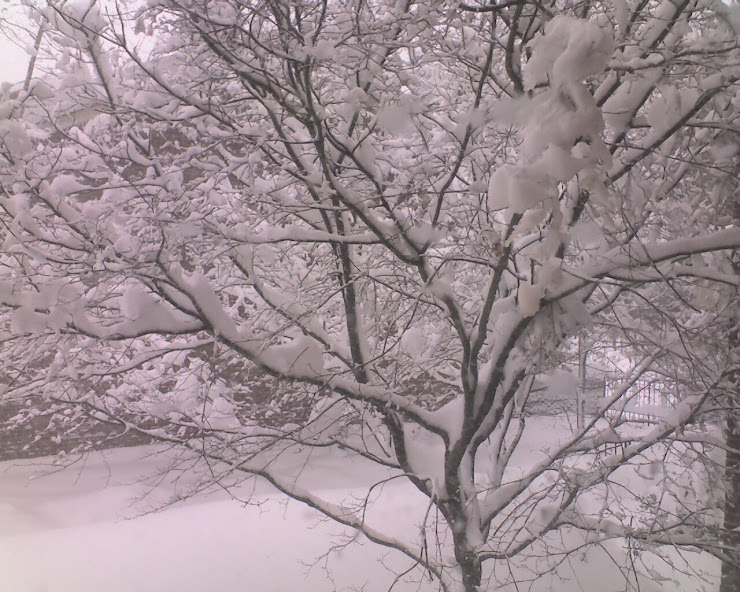
My front yard this morning. Snow Days are fine for getting things done at home but early dismissals can offer up unexpected inspiration to solve long-standing challenges..

IWBs and Pedagogy

IWBs and Pedagogy
Students gather round the IWB known as "Smarty"